

The rated voltage of a cable shall be equal to or higher than the rated voltage of the network it is connected to, and the maximum operating voltage of the cable shall not exceed 15% of its rated voltage. Copper-core cables shall be adopted only for locations subject to frequent movement or severe vibration; aluminum-core cables shall be used under normal circumstances. Cables laid inside cable structures shall be bare-armored cables or bare plastic-sheathed cables with aluminum cladding. For direct buried installation, armored cables or bare plastic-armored cables with aluminum cladding shall be selected. Heavy-duty rubber-sheathed cables shall be applied to mobile machinery. Direct burial installation is generally prohibited for corrosive soil environments; special anti-corrosion cables shall be used if burial is unavoidable. Cable sheaths compatible with the corrosive media present shall be adopted in areas with corrosive substances. Non-dripping cables shall be used for vertically laid cables or cables installed across significant elevation differences. Rubber-insulated cables shall not be deployed where the ambient temperature exceeds 40℃.
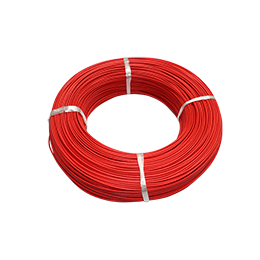
In high-temperature environments where rubber-insulated cables are unsuitable, specialized silicone-based cables can be employed to ensure reliable performance. For applications requiring superior flexibility and mechanical protection in extreme heat, Silicone Braided Wire is highly recommended, as its braided shielding layer provides excellent resistance to abrasion, impact, and electromagnetic interference.
When enhanced electrical safety and double-layer insulation are necessary, Silicone Double Insulated Wire offers an additional protective barrier, making it ideal for demanding industrial and electronic applications.
Furthermore, for compact installations requiring organized and space-efficient wiring, Silicone Parallel Wire provides a streamlined solution, maintaining high-temperature resistance and flexibility while simplifying cable routing in tight spaces.