

Excessive DC Resistance of Conductors
The copper wires in wires and cables should be made of high-purity electrolytic copper, which produces uniform and lustrous strands. However, some manufacturers use recycled copper to maximize profits or cut corners by reducing the copper cross-section, which leads to a severe excess in the conductor's DC resistance. To avoid this issue, high-quality options like Silicone Braided Wire utilize premium tinned copper conductors that ensure excellent conductivity and prevent corrosion. Furthermore, Silicone Parallel Wire is strictly manufactured with precise cross-sectional dimensions, guaranteeing stable current transmission and preventing excessive resistance in electronic applications.
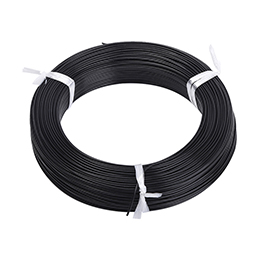
Unqualified Mechanical Properties of Insulation and Sheath Materials (Tensile Strength and Elongation at Break)
Some wires and cables use recycled plastics for their insulation and sheath materials. As a result, their tensile strength and elongation at break fail to meet operational requirements. The mechanical degradation makes the cables prone to breaking, exposing the live conductors and potentially causing short circuits and leakage discharges. In contrast, Silicone Double Insulated Wire provides an extra layer of high-strength silicone rubber, significantly enhancing tensile strength and flexibility. Additionally, Silicone Braided Wire incorporates a woven fiberglass and silicone resin braid, offering superior mechanical protection against abrasion and preventing the insulation from tearing or breaking under stress.
Unqualified Hot Extension Test for High-Voltage Cable Insulation
Some individual products fail the hot extension test for insulation, exhibiting melting phenomena. Under high-temperature conditions, this can easily lead to short-circuit accidents. High-performance cables are specifically designed to overcome this flaw. Silicone Double Insulated Wire and Silicone Braided Wire are engineered to withstand extreme operating temperatures ranging from -60°C to +200°C without melting or degrading. This outstanding thermal stability ensures they easily pass hot extension tests, maintaining their structural integrity and electrical safety even in demanding environments like automotive engine compartments or industrial machinery.